Oleocanthal: the phenolic component of olive oil with multiple benefits to human health
Professor Giannis Tsaknis Former Dean of the Faculty of Food Sciences Department of Food Science and Technology University of West Attica
What is oleocanthal?
Oleocanthal is a polyphenol found only in extra virgin olive oil and has not been found in any other vegetable oil to date, causing a burning sensation in the back of the throat when extra virgin olive oil is consumed. It is an ester of tyrosol and its chemical structure is related to oleuropein and has similar anti-inflammatory activity to the commercial drug ibuprofen (Lucas et al., 2011 and Amos et al., 2005).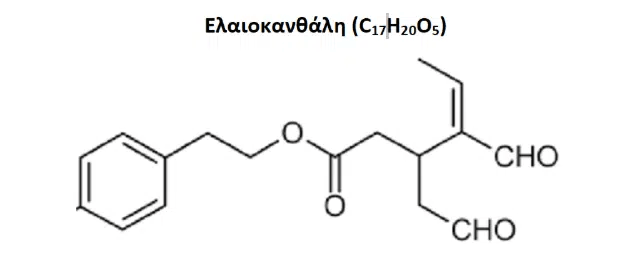
Various studies have shown that the anti-inflammatory and antioxidant properties of oleocanthal in vitro are similar to those of classical non-steroidal anti-inflammatory drugs and that it is a non-selective inhibitor of cyclooxygenase (COX). 50 g of extra virgin olive oil per day provides the human body with oleocanthal, the anti-inflammatory activity of which is equal to 1/10 of the dose of ibuprofen for adults (Beauchamp, et al., 2005).
Other studies have shown that the concentration of oleocanthal in extra virgin olive oil ranges from 284 to 711 mgr/kg and its concentration depends on:
• the variety of the olives,
• the ripeness of the olives at harvest and
• the processing methods applied in the olive mill.
Oils produced from semi-ripe green olives (Early harvest olive oils) usually have the highest concentrations of oleocanthal and other polyphenols. The average consumption of extra virgin olive oil by Mediterranean populations is estimated at 25 – 30 ml, so the intake of oleocanthal ranges between 6.5 and 19.6 mgr.
Various studies have shown that the anti-inflammatory and antioxidant properties of oleocanthal in vitro are similar to those of classical non-steroidal anti-inflammatory drugs and that it is a non-selective inhibitor of cyclooxygenase (COX). 50 g of extra virgin olive oil per day provides the human body with oleocanthal, the anti-inflammatory effect of which is equal to 1/10 of the dose of ibuprofen for adults (Beauchamp, G. K. et al, 2005).
Oleocanthal is associated with the following beneficial properties for the human body:
It has anti-inflammatory effects: Oleocanthal acts as a natural anti-inflammatory agent and inhibits the action of cyclooxygenase enzymes (COX-1 and COX-2), which are key players in the body's inflammatory pathways and acts like ibuprofen, resulting in a decrease in the production of pro-inflammatory compounds (prostaglandins). Of course, the amount of oleocanthal in a typical serving of Extra Virgin Olive Oil (EVOO) is not sufficient to relieve pain, as is done with a therapeutic dose of ibuprofen, but long-term consumption contributes to a reduced incidence of chronic inflammatory diseases, which are observed in populations that follow a Mediterranean diet. Low-grade, chronic inflammation is associated with cardiovascular disease, diabetes, Crohn's disease, certain types of cancer, and neurodegenerative disorders.
Provides antioxidant protection: Blocks free radicals that cause oxidative stress and damage to blood vessel walls, protecting the endothelium (the inner lining of blood vessels), and helping to maintain blood vessels. Oxidative stress is a contributing factor in the development of inflammation, which is associated with insulin resistance. Oleic acid helps reduce LDL cholesterol, but polyphenols, including oleocanthal, prevent LDL oxidation. Oxidized LDL is an important factor in the development of atherosclerosis (plaque buildup in the arteries).
Protects against various types of cancer: Several studies have shown that oleocanthal has anticancer properties in human liver cells, inhibits tumor growth and can cause cell death of cancer cells, without affecting healthy ones. This action occurs through a mechanism called lysosomal membrane permeabilization, because it causes the rupture of lysosomes – the cell’s “waste disposal” organelles – releasing enzymes that lead to the death of the cancer cell.
Oleocanthal has also been shown to be a chemopreventive agent and inhibits the action of certain enzymes and proteins involved in the proliferation and metastasis of cancer cells, as shown by various in vitro studies in animals. These studies do not suggest that olive oil can cure cancer, but frequent consumption of EVOO by Mediterranean residents may help reduce the risk of certain types of cancer.
In 2020, the National Cancer Institute in the United States reported that oleocanthal may help fight breast cancer. It helps prevent neurodegenerative diseases, especially Alzheimer's disease: The antioxidant activity of oleocanthal helps reduce cytokines, which contribute to the creation of neuroinflammation, and interferes with the accumulation of beta amyloid protein in the brain, which gradually accumulates in the brain and forms sticky masses that prevent smooth nerve function and is largely responsible for Alzheimer's disease. As this process progresses, neurons are deprived of valuable nutrients, are unable to communicate with other cells, and eventually die. Also, oleocanthal deactivates the complement peptide receptor C3a 1 (C3AR1), in patients with Alzheimer's disease, this receptor is overactive and contributes to the creation of inflammation in which damaged cells are bound, contributing to the development of dementia.
Protects against cardiovascular diseases: It contributes to maintaining normal levels of cholesterol and blood pressure, thus protecting blood lipids. Its anti-inflammatory and antioxidant action protects the vessels, reducing the risk of atherosclerosis and heart attacks. Various studies have shown that it has antiplatelet effects similar to those of aspirin. It inhibits the accumulation of platelets, preventing the formation of blood clots, one of the main causes of heart attacks and strokes. Recent research has shown that oleocanthal improves the health of people suffering from chronic cardiometabolic diseases, including obesity and diabetes.
Improves digestion: Consumption of oleocanthal is associated with better digestion and a reduced risk of gastrointestinal diseases. It also protects the stomach from Helicobacter pylori, which causes ulcers.
Metabolic Health: Regulates sugar and lipids, improves insulin sensitivity and reduces fatigue.
It acts protectively in the development of osteoarthritis and rheumatoid arthritis, which are aggravated by the production of pro-inflammatory cytokines responsible for the increased production of nitric oxide and prostaglandins. Prostaglandins synthesize various enzymes that contribute to the degradation of joint cartilage.
Helps regenerate damaged skin: Spanish researchers published that oleocanthal helps increase fibroblasts (skin cells) that contribute to the regeneration and repair of damaged skin.
References
1. Abuznait, A.H., Hisham, Q., Busnena, B.A., El Sayed, K.A. and Kaddoumi, A. (2013). Olive-Oil-Derived Oleocanthal Enhances β-Amyloid Clearance as a Potential Neuroprotective Mechanism against Alzheimer’s Disease: In Vitro and in Vivo Studies, ACS Chem Neurosci., 4, 973–982.
2. Agrawal, Κ., Melliou, Ε., TL Pedersen, X. Li., Wang, SC., Magiatis, P., Newman, JW. and Holt, RR. (2017). Oleocanthal-rich extra virgin olive oil demonstrates acute anti-platelet effects in healthy men in a randomized trial, Journal of Functional Foods, 36, 84–93.
3. Al Rihani SB, Darakjian LI, Kaddoumi A. (2019). Oleocanthal-Rich Extra-Virgin Olive Oil Restores the Blood-Brain Barrier Function through NLRP3 Inflammasome Inhibition Simultaneously with Autophagy Induction in TgSwDI Mice, ACS Chem Neurosci., 10(8), 3543-3554, doi: 10.1021/acschemneuro.9b00175.
4. Beauchamp, G.K., Keast, RSI., Morel, D., Lin, J., Pika, J., Han, Q., Lee,C-H., Amos B Smith, AB. And Breslin, P.A.S. (2005). Phytochemistry: ibuprofen-like activity in extra-virgin olive oil, Nature, 437, 45-46, doi: 10.1038/437045a.
5. Corona, G., Spencer, J.P. and Dessi, M.A. (2009). Extra virgin olive oil phenolics: absorption, metabolism, and biological activities in the GI tract, Toxicol. Ind. Health, 25, 285–293.
6. Kaddoumi, A., Madiha, R., & Tuba, A. (2018). Olive Oil-Derived Oleocanthal Inhibits the Proliferation of Breast Cancer Cells by Targeting c-Met., Nutrients, 10(7), 885.
7. López-Yerena, Α., Vallverdú-Queralt Α., Jáuregui, Ο., Garcia-Sala, X., Lamuela-Raventós, R.M. and Escribano-Ferrer, E. (2021). Tissue Distribution of Oleocanthal and Its Metabolites after Oral Ingestion in Rats, 10(5), 688, doi: 10.3390/antiox10050688.
8. Monti, M.C., Margarucci, L., Tosco, A., Riccio, R. and Casapullo, A. (2011). New insights on the interaction mechanism between tau protein and oleocanthal, an extra-virgin olive-oil bioactive component, Food Funct., 2, 423–428.
9. Rivero-Pino, F. (2023). Review – Oleocanthal – Characterization, production, safety, functionality and in vivo evidences, Food Chemistry, 425, doi: 10.1016/ j.foodchem.2023.136504.
10. Pei, T., Meng, Q., Han, J., Sun, H., Li, L., Song, R., Sun, B., Pan, S., Liang, D. and Liu. L. (2016). Oleocanthal inhibits growth and metastasis by blocking activation of STAT3 in human hepatocellular carcinoma, Oncotarget, 28, 43475-43491, doi: 10.18632 /oncotarget.9782.
11. Pitt, J., Morassuti, D. J., & Kaddoumi, A. (2013). Olive-Oil-Derived Oleocanthal Enhances β-Amyloid Clearance as a Potential Neuroprotective Mechanism against Alzheimer’s Disease: In Vitro and in Vivo Studies, ACS Chemical Neuroscience, 4(11), 1540-1547.
12. Qosa, H., Abuznait, A.H., Hill, R.A. and Kaddoumi, A. (2012) Enhanced brain amyloid-beta clearance by rifampicin and caffeine as a possible protective mechanism against Alzheimer’s disease, J. Alzheimer’s Dis., 31, 151–165.
13. Ruiz-García, P., Ortíz-Flores, R., Badía, R. et al. (2023). Rich oleocanthal and oleacein extra virgin olive oil and inflammatory and antioxidant status in people with obesity and prediabetes. The APRIL study: A randomised, controlled crossover study, Clinical Nutrition, 42(8), 1389-1398.
14. Scirè, A., Loffredo, L., Zicari, A.M., Scipione, L., Nucera, E., De Matteis, G. and Loffredo, S. (2020). Antiplatelet and Antioxidant Effects of Extra Virgin Olive Oil, Molecules, 25(10), 2321.
15. Smith, A.B., Han, Q., Breslin, P.A.S. and Beauchamp, G.K. (2005). Synthesis and assignment of absolute configuration of (-)-oleocanthal: a potent, naturally occurring non-steroidal anti-inflammatory and anti-oxidant agent derived from extra virgin olive oils, Org. Lett., 7(22), 5075-5078, doi: 10.1021/ol052106a.
16. Yanli, Gu ., Jing, W and Lixin, P. (2017). Oleocanthal exerts anti-melanoma activities and inhibits STAT3 signaling pathway, Oncol Rep., 37(1), 483-491., doi: 10.3892/or.2016.5270. Epub 2016 Nov 23.
*This paper was presented at: 11th Olive Oil & Table Olive Congress, 25-26 April 2026, International Exhibition Centre, Heraklion Crete.
Source: cibum.gr (Translated)